- 12741 Research Blvd. Suite 500 Austin, TX
- sales@rastracmarinevision.com
- (877) 680-1188
A pontoon boat rental operation loses a peak-season weekend when an engine fails mid-tour. The breakdown costs $8,000 in emergency repairs, refunds, and lost revenue. The culprit? A missed oil change that was due 20 operating hours earlier. This scenario repeats across marinas, charter operations, and yacht clubs every season because traditional maintenance tracking–spreadsheets, paper logs, and memory–fails under the complexity of managing multiple watercraft with different service intervals.
Modern watercraft monitoring companies have evolved beyond simple GPS tracking. The most effective platforms now combine real-time location data with comprehensive maintenance scheduling tools that prevent failures, reduce costs, and eliminate the manual burden of fleet maintenance management. Here’s what separates industry-leading solutions from basic tracking systems.
Marine environments present unique maintenance challenges that land-based fleet tracking systems weren’t designed to handle. A fishing boat’s engine might log only 200 hours annually but experience harsh saltwater corrosion. A jet ski fleet might require daily pre-rental inspections during summer but sit unused for six winter months.
Effective marine maintenance scheduling requires multiple trigger types working simultaneously. Odometer-based triggers track every 100 engine hours for oil changes on a center console fishing boat. Time-based triggers ensure annual hull inspections happen regardless of usage. Condition-based monitoring watches battery voltage on a sailboat that sits docked for weeks, predicting battery failure 2-4 weeks in advance based on voltage trend analysis.
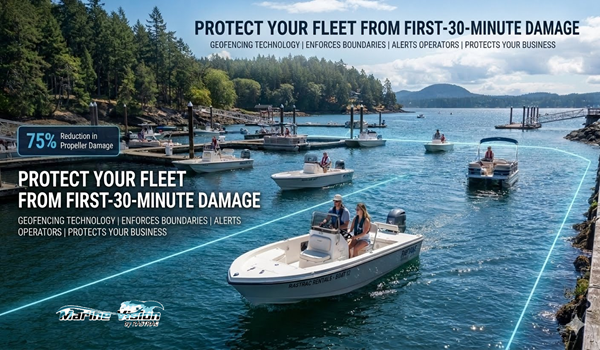
The most sophisticated platforms integrate these trigger types with real-time engine diagnostics. When a wakeboard boat’s engine temperature climbs above normal operating range, the system immediately alerts fleet managers and flags the watercraft for inspection–preventing catastrophic overheating damage. This multi-layered approach has documented results: Marine Vision customers report a 75% reduction in propeller damage through predictive maintenance scheduling that catches issues before they cascade into expensive failures.
Temperature monitoring proves critical for marine applications. Refrigerated transport boats carrying seafood need continuous cold-chain verification. A charter yacht’s air conditioning system requires monitoring during Florida summers. Advanced tracking platforms record temperature readings every 15 minutes, creating an immutable maintenance record that satisfies insurance requirements and prevents cargo loss claims.
Manual maintenance tracking fails at scale. A marina managing 50 rental boats would need to manually check 50 different service schedules weekly, cross-reference engine hours from individual logbooks, and remember which pontoon boat needs its annual inspection next month. This administrative burden leads to missed intervals and unplanned downtime.
Rastrac’s Marine Vision platform, backed by 32 years of GPS tracking expertise, automates the entire maintenance workflow from detection through completion:
Automated Maintenance Detection: The system continuously monitors engine hours from watercraft telematics. When a ski boat reaches 480 of its 500-hour oil change interval, the platform generates an alert to the maintenance manager–not the day it’s due, but 20 hours in advance. This lead time allows scheduling during slow periods rather than peak weekends.
Work Order Integration: Leading platforms integrate with CMMS (Computerized Maintenance Management System) platforms like Fleetio or RTA Fleet Management. When maintenance comes due, the GPS system automatically creates a work order in the CMMS, assigns it to available technicians, reserves required parts from inventory, and schedules the appointment. A yacht requiring transmission service gets fully scheduled without a single manual entry.
Parts and Labor Tracking: The CMMS integration flows both directions. After a technician completes an oil change on a personal watercraft and closes the work order, that completion data returns to the GPS platform. The system resets the maintenance schedule to zero, sets the next service due at 500 engine hours from the current reading, and updates cost accounting with parts usage and labor hours–all automatically synchronized.
Mobile Technician Dispatch: When a charter fishing boat throws a diagnostic trouble code (DTC) for low oil pressure 30 miles offshore, the GPS system’s real-time alerts notify both the captain and maintenance staff. The platform displays the boat’s exact coordinates, calculated ETA back to the marina, and recommended immediate actions. A mobile service technician receives the work order before the boat even docks.
This automation delivers measurable results. Fleet managers using comprehensive scheduling tools save 15-25% on maintenance costs by catching issues early, optimizing technician schedules, and eliminating emergency repairs during peak seasons. The 99.99% uptime of cloud-based platforms ensures maintenance data remains accessible even during weather events that disrupt marina operations.
A speedboat’s “check engine” light rarely provides useful detail. Modern marine tracking platforms pull detailed diagnostic data directly from engine computers through OBD-II and J1939 protocols, giving fleet managers visibility into problems before they strand customers offshore.
Critical engine parameters monitored in real-time include:
Condition-based maintenance uses this diagnostic data to move beyond rigid time intervals. Instead of changing spark plugs every 100 hours regardless of condition, the system analyzes combustion data and recommends replacement only when performance degrades. This approach prevented an estimated $42,000 in unnecessary maintenance for a 100-boat rental fleet by replacing only components that actually needed service.
Advanced platforms also monitor usage patterns that affect maintenance needs. A jet ski used for aggressive wake jumping accumulates more wear than one used for casual cruising, even with identical engine hours. GPS accelerometer data tracks harsh acceleration events and jump impacts, adjusting maintenance schedules for high-stress watercraft while extending intervals for gently operated boats.
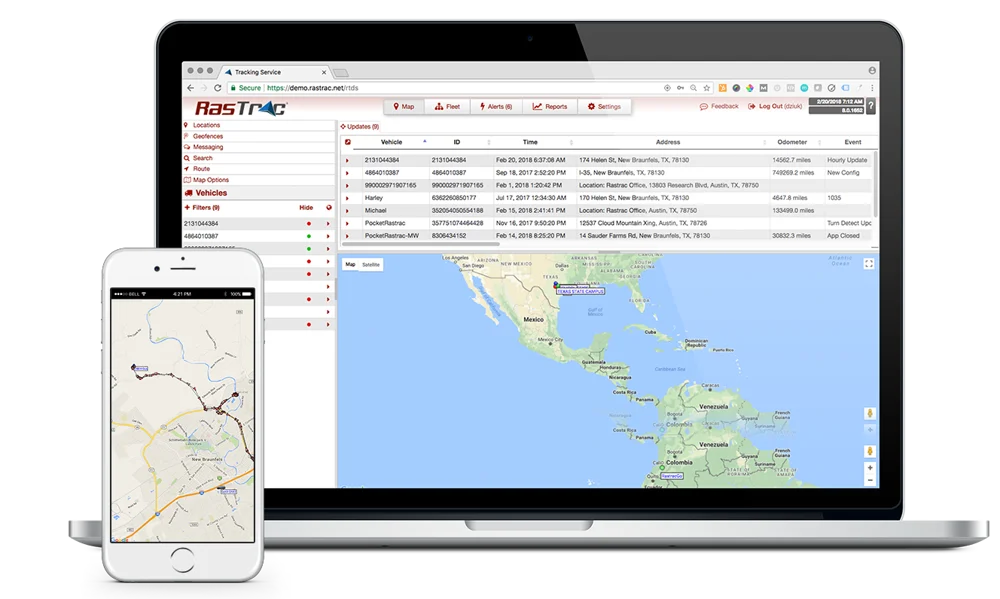
Managing maintenance for a diverse fleet–mixing pontoon boats, fishing charters, and sailboats–requires unified visibility. The best marine tracking platforms consolidate all watercraft data into a single centralized dashboard where fleet managers see upcoming maintenance across their entire operation.
Visual scheduling displays maintenance timelines graphically. A marina operator logs in and immediately sees which boats need service this week, which are approaching intervals, and which are maintenance-free. Color coding highlights urgency: green for boats with 100+ hours before service, yellow for boats within 20 hours of due, red for overdue maintenance requiring immediate attention.
Fleet-wide reporting aggregates maintenance data for strategic analysis. A charter operation discovers that two specific boat models consistently require transmission service 30% earlier than manufacturer recommendations. This insight drives purchasing decisions–avoiding those models for future acquisitions and negotiating warranty coverage for existing boats experiencing premature failures.
Driver-specific tracking (in this case, captain-specific) identifies operators who consistently trigger more maintenance needs. When one fishing guide averages twice the propeller repairs of other captains, the data reveals either an operational technique problem or a specific route with more underwater hazards. Either way, the platform provides evidence-based insights for training or route adjustments.
Mobile access ensures maintenance visibility isn’t confined to office computers. A dock manager walking the marina uses a smartphone app to pull up any boat’s complete service history–last oil change date, engine hours, outstanding work orders, and upcoming intervals. This real-time mobile access eliminates the delays of returning to a desktop to look up maintenance status.
Rastrac’s platform integrates all these capabilities with 300,000+ assets tracked globally and infrastructure supporting $2.5 billion in worldwide asset value. That enterprise-grade reliability matters when peak season revenue depends on keeping every watercraft operational.
How often should marine GPS tracking devices report engine hours for maintenance scheduling?
For most recreational and charter operations, updating engine hours every 30-60 seconds while underway provides sufficient accuracy without overwhelming cellular data plans. High-value yachts or boats operating offshore may report every 10 seconds for more granular monitoring. Rastrac’s Marine Vision platform allows customizable reporting intervals–balancing maintenance precision against data costs based on each operation’s specific needs. Battery-powered tracking devices on sailboats or non-motorized watercraft can report daily or motion-triggered to maximize battery life while maintaining maintenance schedule accuracy.
Can watercraft maintenance scheduling integrate with existing marina management software?
Yes, leading platforms like Rastrac provide RESTful APIs that connect with popular marina management systems, accounting software, and CMMS platforms. These integrations automatically synchronize maintenance schedules, work orders, parts costs, and labor hours between systems–eliminating duplicate data entry. For example, when a boat rental concludes in your marina software, that timestamp flows to the GPS tracking platform to calculate post-rental engine hours and determine if maintenance is due before the next reservation. This integration has helped charter operations reduce scheduling conflicts by 40% through automated maintenance windows.
What happens if a tracked boat loses cellular signal during offshore operation–does maintenance tracking stop?
Modern tracking devices store 50,000+ events locally when cellular connectivity is unavailable. A fishing boat operating 30 miles offshore continues logging engine hours, temperature readings, and diagnostic codes even without signal. When the watercraft returns to coverage range, all stored data uploads automatically and the maintenance scheduling system processes the complete operating history–ensuring no service intervals are missed due to temporary signal loss. For operations requiring continuous offshore monitoring, Rastrac’s ST9100 hybrid device automatically switches to satellite communication when cellular signals fade, maintaining uninterrupted data flow.
How do maintenance scheduling platforms handle different service intervals for identical watercraft models?
Intelligent platforms recognize that two identical pontoon boats might require different maintenance schedules based on operating conditions. The system tracks individual usage patterns–one boat operating in saltwater might need corrosion inspections every 100 hours, while its freshwater twin extends that interval to 200 hours. Environmental sensors monitoring water salinity, operating temperature, and load factors automatically adjust service schedules per boat. Rastrac customers report this customization prevents both unnecessary early maintenance and costly delayed service by matching schedules to actual operating stress rather than rigid calendar dates.
Can maintenance scheduling systems predict failures before they happen or just remind about scheduled service?
Advanced platforms like Rastrac’s Marine Vision do both. Scheduled reminders handle time-based and hour-based intervals (oil changes, inspections), while predictive analytics monitor real-time diagnostics to forecast failures. The system analyzes battery voltage trends to predict failure 2-4 weeks ahead, tracks coolant temperature patterns indicating developing thermostat issues, and monitors vibration data suggesting bearing wear. This predictive capability documented a 75% reduction in propeller damage for Marine Vision by Rastrac customers by catching early warning signs–loose propeller bolts causing abnormal vibration–before complete propeller loss occurred. The combination of scheduled and predictive maintenance delivers comprehensive fleet protection.
Keep Your Fleet on the Water, Not in the Shop
Your watercraft monitoring platform should do more than show dots on a map. Comprehensive maintenance scheduling prevents failures, reduces costs, and maximizes time on the water. Rastrac’s Marine Vision platform brings 32 years of GPS tracking expertise to marine fleet management with automated scheduling, real-time diagnostics, and integrated maintenance workflows that have helped operations reduce propeller damage by 75% while cutting maintenance costs up to 25%. Stop managing maintenance with spreadsheets–start preventing problems before they happen.
Request a Demo | (877) 680-1188 | sales@rastracmarinevision.com
Rastrac complements any organization-wide quality assurance program and can help their fleet become the model for operational superiority.
Rastrac helps clients make improvements in processes, organization, financials, communications, and technology. Clients that have taken advantage of Rastrac’s ability to provide solutions tailored to their business are in a wide variety of industries. Rastrac can help you find a solution, too.
We’d love to discuss how we can help you.
Basic service for your OEM-connected vehicles. No hardware. No installation.
Offer ends November 30, 2026
