- 12741 Research Blvd. Suite 500 Austin, TX
- sales@rastracmarinevision.com
- (877) 680-1188
For marinas, boat clubs, and watercraft rental companies, fuel costs extend far beyond the price paid at the pump. Excessive idling, aggressive acceleration, unnecessary trips, unauthorized use, and inefficient operating practices can all increase consumption.
The challenge? Most rental operators know how much they’re spending on fuel, but few have a complete picture of why their boats consume as much fuel as they do.
That’s where fleet data makes a difference.
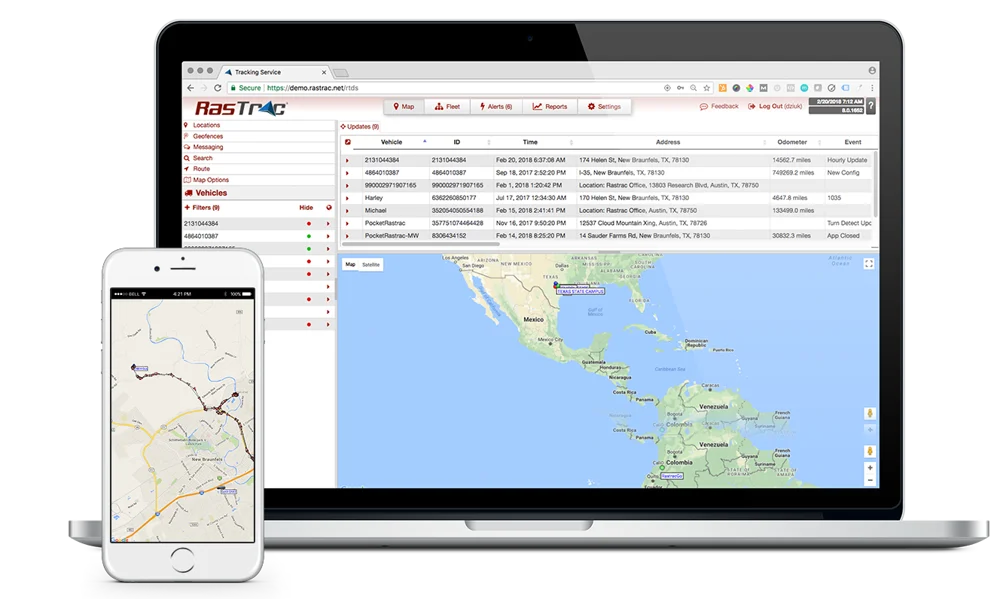
Marine Vision by Rastrac helps boat rental businesses gain greater visibility into watercraft activity through GPS tracking, speed monitoring, trip history, geofencing, and operator behavior analysis.
By understanding how boats are actually being used, rental companies can identify opportunities to reduce unnecessary fuel consumption, improve operating efficiency, and protect their bottom line.
A boat doesn’t have to be moving to consume fuel.
Rental watercraft frequently spend time idling while customers prepare to depart, wait near docks, or remain stationary with engines running.
Although some idling is necessary for safe operation, excessive engine operation can create avoidable expenses.
Consider a rental fleet of 25 boats. If each vessel spends an additional 20 minutes per rental day running unnecessarily, the combined fuel consumption can become significant over an entire boating season.
Marine Vision can help operators analyze vessel activity, including periods of limited movement. Where engine status or engine-hour data is available, managers can more accurately distinguish actual engine idling from a boat simply remaining stationary.
What fleet managers can do:
Small operational improvements, repeated across an entire rental fleet, can produce meaningful savings.
Speed affects more than safety. It also influences fuel consumption.
Depending on vessel design, engine configuration, load, and water conditions, operating at higher speeds can significantly increase fuel burned per mile.
Aggressive acceleration, repeated high-speed operation, and inefficient throttle management can also contribute to increased fuel use.
For rental operators, these behaviors can be difficult to identify without reliable operating data.
Marine Vision provides speed monitoring and historical tracking information that can help managers understand how watercraft are being operated.
With properly configured speed thresholds and geofences, businesses can identify patterns of excessive speed and review activity in sensitive operating areas.
This information can help operators:
The goal isn’t simply to make every boat travel slower. It’s to encourage responsible operation that balances safety, customer enjoyment, and fuel efficiency.
Not every vessel in a rental fleet operates with the same efficiency.
Even similar boats may experience different fuel consumption because of engine condition, maintenance history, operating patterns, and customer behavior.
Without fleet data, managers may assume that higher fuel costs are simply the result of more rental activity.
However, a boat that consistently consumes more fuel than comparable vessels could indicate an operational or mechanical issue.
By combining Marine Vision’s utilization, trip, speed, and available engine-hour data with fuel purchase or refueling records, rental companies can begin identifying these differences.
For example, a fleet manager might discover that two similar pontoons operate for approximately the same number of hours, yet one requires substantially more fuel.
That difference could justify investigating:
Marine Vision supplies valuable operational context. Actual fuel consumption comparisons require fuel records or compatible engine fuel data.
Fleet data helps turn unexplained fuel expenses into specific questions that managers can investigate.
Fuel costs aren’t always associated with paying customers.
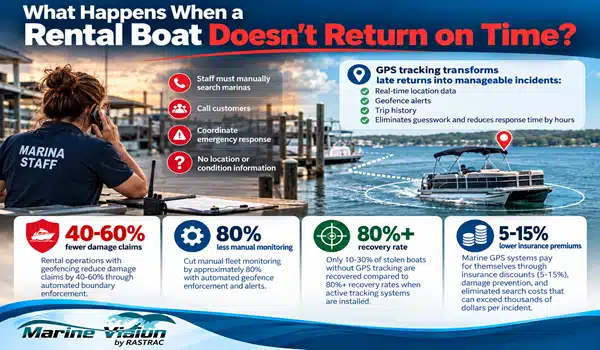
Unauthorized boat use, unnecessary employee trips, and vessels operating outside scheduled rental periods can increase expenses without generating additional revenue.
For a rental business managing multiple docks or marina locations, identifying this activity manually can be challenging.
Marine Vision’s GPS tracking and geofencing capabilities can help managers monitor when and where boats move.
Depending on device configuration, operators can establish notifications for unexpected activity, departures from designated areas, or movement outside approved operating schedules.
This visibility helps rental companies:
Preventing even a few unauthorized trips can help reduce fuel expenses, unnecessary engine hours, and exposure to potential damage.
How far are customers actually traveling?
Are certain boats consistently used for longer trips? Are renters operating well beyond typical cruising areas? Do some vessels spend most of their rental time making repeated high-speed runs?
Without trip data, these questions are difficult to answer.
Marine Vision’s trip history and location reporting can help operators evaluate how their boats are used.
Rental businesses can analyze available information such as:
This information can help managers develop more effective rental policies and improve fleet planning.
For example, a rental company might discover that boats assigned to certain rental packages consistently travel much farther than expected.
That insight could lead to revised rental terms, clearer operating boundaries, or better matching of boats to customer needs.
Rather than relying on assumptions, managers can make decisions using actual vessel activity.
Fuel efficiency and equipment condition are closely connected.
Poorly maintained engines, damaged propellers, and neglected service intervals can increase fuel consumption and operating costs.
Boat rental companies often schedule maintenance based on calendar dates or manual engine-hour readings.
However, seasonal rental activity can vary significantly between vessels.
A popular pontoon may accumulate substantially more engine hours than another boat of the same age.
Marine Vision supports maintenance management through available usage information and engine-hour-based scheduling where compatible data is provided.
This helps operators:
A well-maintained fleet can improve reliability, reduce avoidable operating expenses, and deliver a better customer experience.
One of the most valuable opportunities for boat rental companies is connecting fleet activity with business performance.
Rather than evaluating fuel costs as a single monthly expense, operators can measure them against the revenue and activity generated by each vessel.
Useful metrics include:
Fuel Cost per Rental: Total fuel expense divided by the number of completed rentals.
Fuel Cost per Engine Hour: Fuel expense divided by actual engine operating hours.
Fuel Cost per Mile: Fuel expense divided by distance traveled.
Fuel Cost as a Percentage of Rental Revenue: Fuel expense divided by rental revenue, multiplied by 100.
Revenue per Engine Hour: Rental revenue divided by engine operating hours.
These metrics help managers identify which boats generate the strongest returns and which may need operational adjustments.
Marine Vision provides tracking and activity data that can support these calculations when combined with fuel expenses, reservation records, and compatible engine data.
Consider a hypothetical rental company operating 30 boats, with an average fuel expense of $40 per boat per operating day over a 180-day season.
| Metric | Amount |
| Rental fleet | 30 boats |
| Average daily fuel expense per boat | $40 |
| Operating days per season | 180 |
| Estimated seasonal fuel expense | $216,000 |
| Hypothetical fuel expense reduction | 10% |
| Potential seasonal savings | $21,600 |
This example is illustrative, not a guaranteed or measured Marine Vision result. Actual savings depend on utilization, fuel prices, vessel types, existing operating practices, and the improvements implemented.
However, it demonstrates an important principle:
Even modest improvements in fuel efficiency can create substantial financial benefits when multiplied across an entire rental fleet.
And fuel savings may be only part of the return. Better operating visibility can also support maintenance planning, theft prevention, improved accountability, and more efficient fleet management.
GPS tracking has traditionally been associated with knowing where an asset is located.
But for today’s boat rental companies, location is only the beginning.
Marine Vision by Rastrac helps marine operators understand how their watercraft are being used, identify inefficient operating patterns, and make more informed management decisions.
With the right data, operators can move beyond simply recording fuel purchases and begin investigating the behaviors and conditions that influence those costs.
Whether you’re managing five rental boats or a fleet spread across multiple marinas, improved visibility can help you operate more efficiently.
Every rental trip produces information about how a boat is operated.
Speed, distance, operating patterns, trip duration, and available engine-hour information can all contribute to a clearer picture of fleet efficiency.
The question is whether that information is being used to improve your operation.
Marine Vision by Rastrac helps turn watercraft tracking data into actionable operational insight.
Discover how Marine Vision can help your rental business improve fleet visibility, identify operational inefficiencies, and make more informed decisions.
Visit: www.rastracmarinevision.com
Email: sales@rastracmarinevision.com
Call: (877) 680-1188
Marine Vision by Rastrac — Smarter Tracking. Better Fleet Management. More Informed Decisions.
Rastrac complements any organization-wide quality assurance program and can help their fleet become the model for operational superiority.
Rastrac helps clients make improvements in processes, organization, financials, communications, and technology. Clients that have taken advantage of Rastrac’s ability to provide solutions tailored to their business are in a wide variety of industries. Rastrac can help you find a solution, too.
We’d love to discuss how we can help you.
Basic service for your OEM-connected vehicles. No hardware. No installation.
Offer ends November 30, 2026
